
The crown and the cross
Special registration
31 Oct 2025—1 Feb 2027
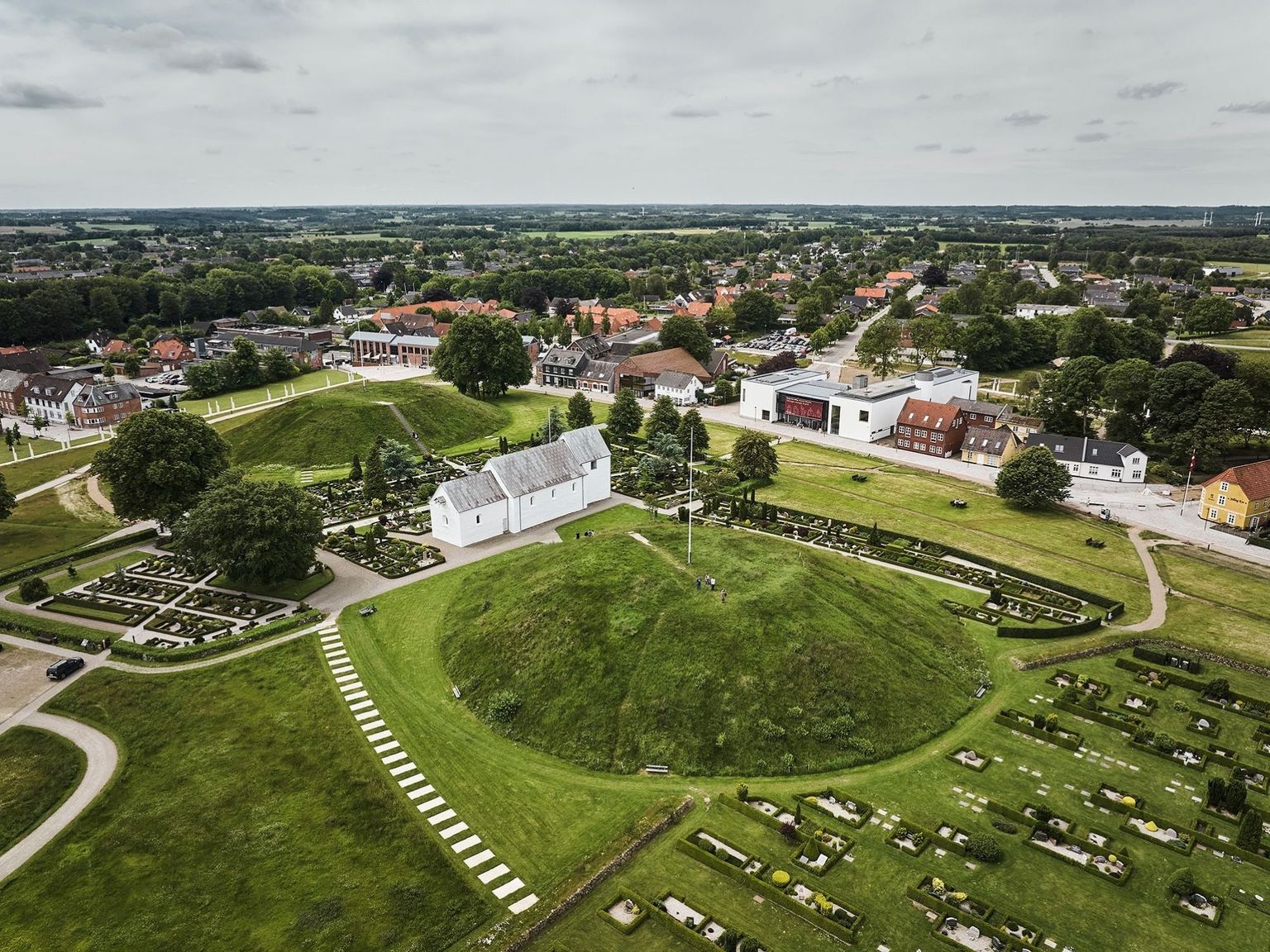
Jelling is one of Denmark's most important historical sites. See the mighty monuments of the Viking kings while hearing about faith, power and love.
Here King Gorm, Queen Thyra and their son Harald Bluetooth laid the foundations for Denmark - with the beginning of the Danish monarchy, the transition to Christianity and the early formation of the state. Hear and see the story of the great changes that created the kingdom you know today.
Information
Duration: 60 minutes - can be extended to 90 minutes
Meeting place: Foyer
Accessibility: People with walking difficulties may have difficulty getting the full benefit of the tour.
Price: 60 DKK per person on weekdays (minimum price 1,500 DKK)
The price does not include admission to the visitor center and museum exhibitions, but if you wish to purchase an admission ticket, we offer a 25% discount.
Note: surcharge on weekends and holidays is 250 DKK per group. The tour can be booked in english, danish and german
1.
What you’ll see with your own eyes
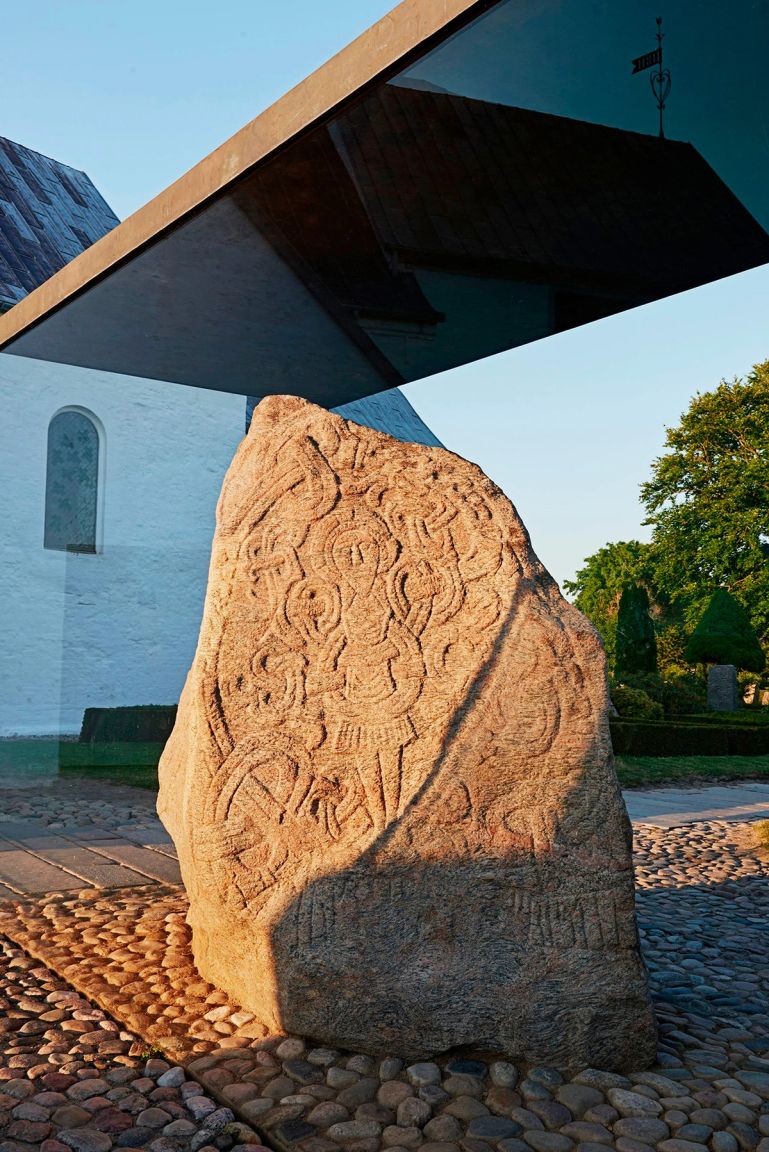
The kingdom’s christening and name were set in stone
For more than a 1,000 years, the Jelling stones have stood as enduring symbols of the birth of the Danish state and national identity. Here, the name Denmark is written as well as the kings and queens who shaped the nation we know today are brought into history.
2.
The bigger the better
Harald Bluetooth loved to boast and show off. The monument complex is testament to this. The mounds are among the largest in Danish history. His rune stone is the largest in the world. The ship setting is the largest known, and the palisade is the largest single construction from the Danish Viking Age. When it comes to symbolising power, and according to Harald Bluetooth, bigger is always better.
3.
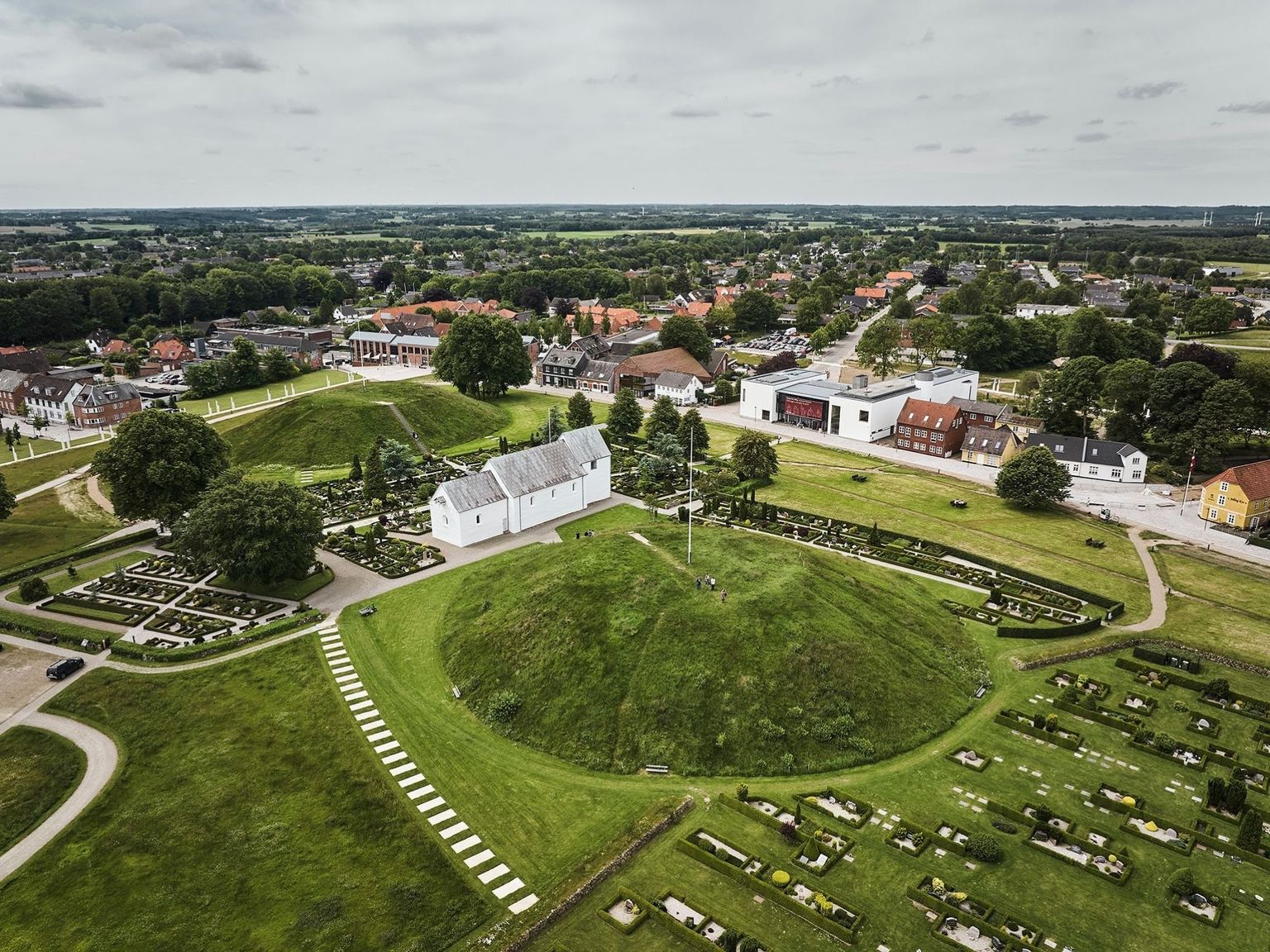
From a heathen heart to a Christian crown
At Jelling, Harald blended ancient pagan traditions with the new Christian faith in a way never seen before – honouring the past while looking towards the future. In doing so, he paid tribute both to his heathen parents and the new religion. The architecture still speaks of this defining moment in Danish history.