A unique gold find sheds light on the power and faith in Denmark before the Viking kings took the stage.
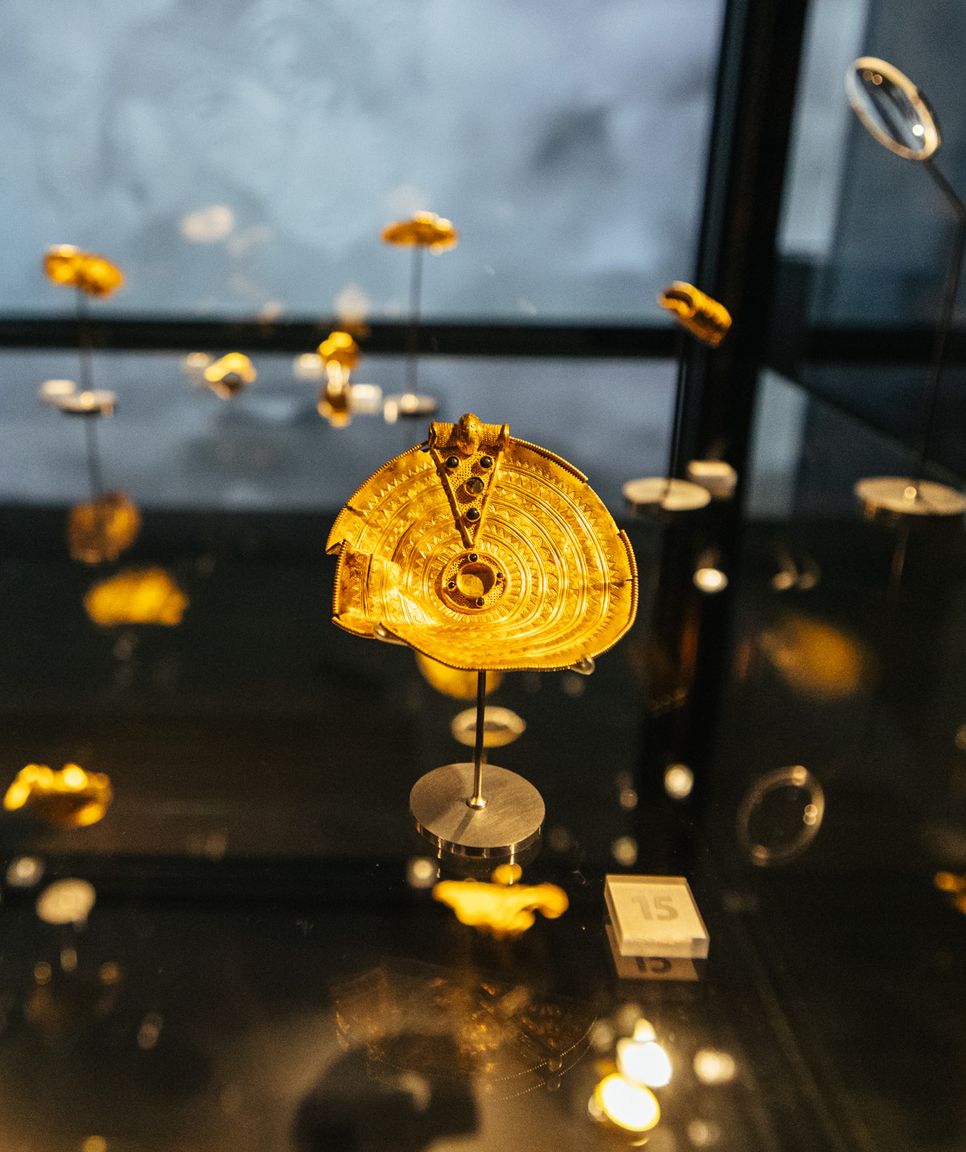
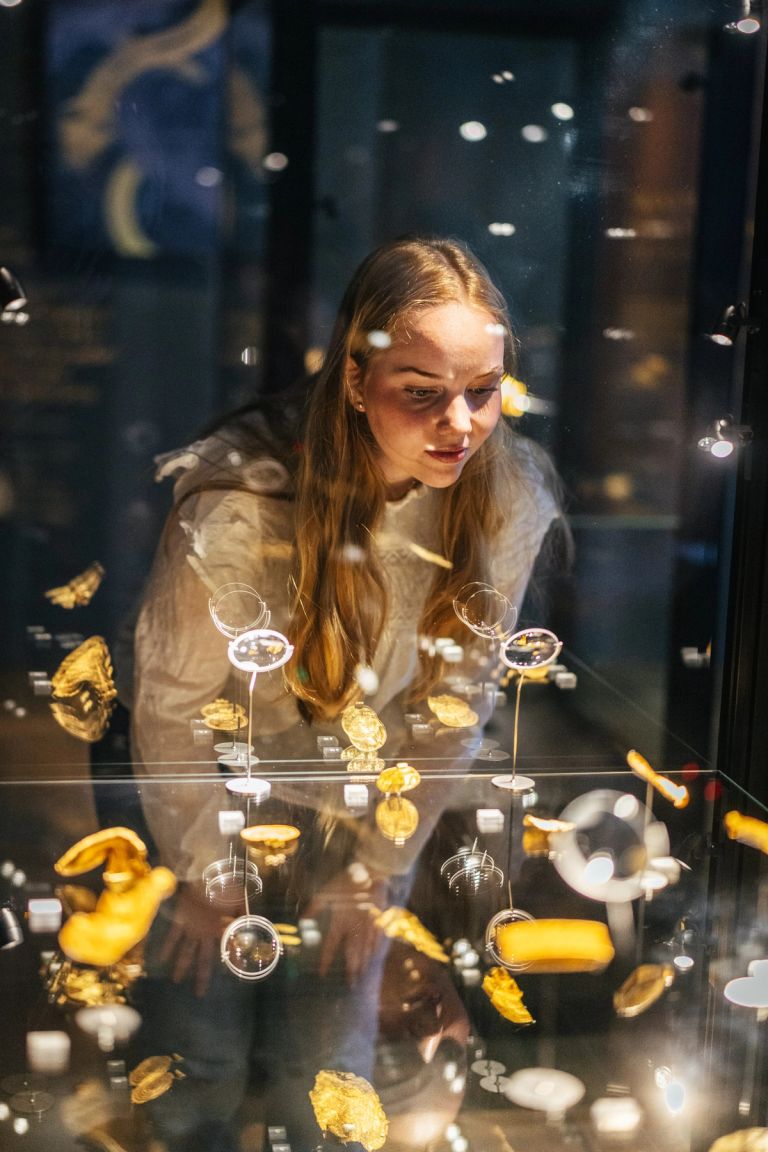
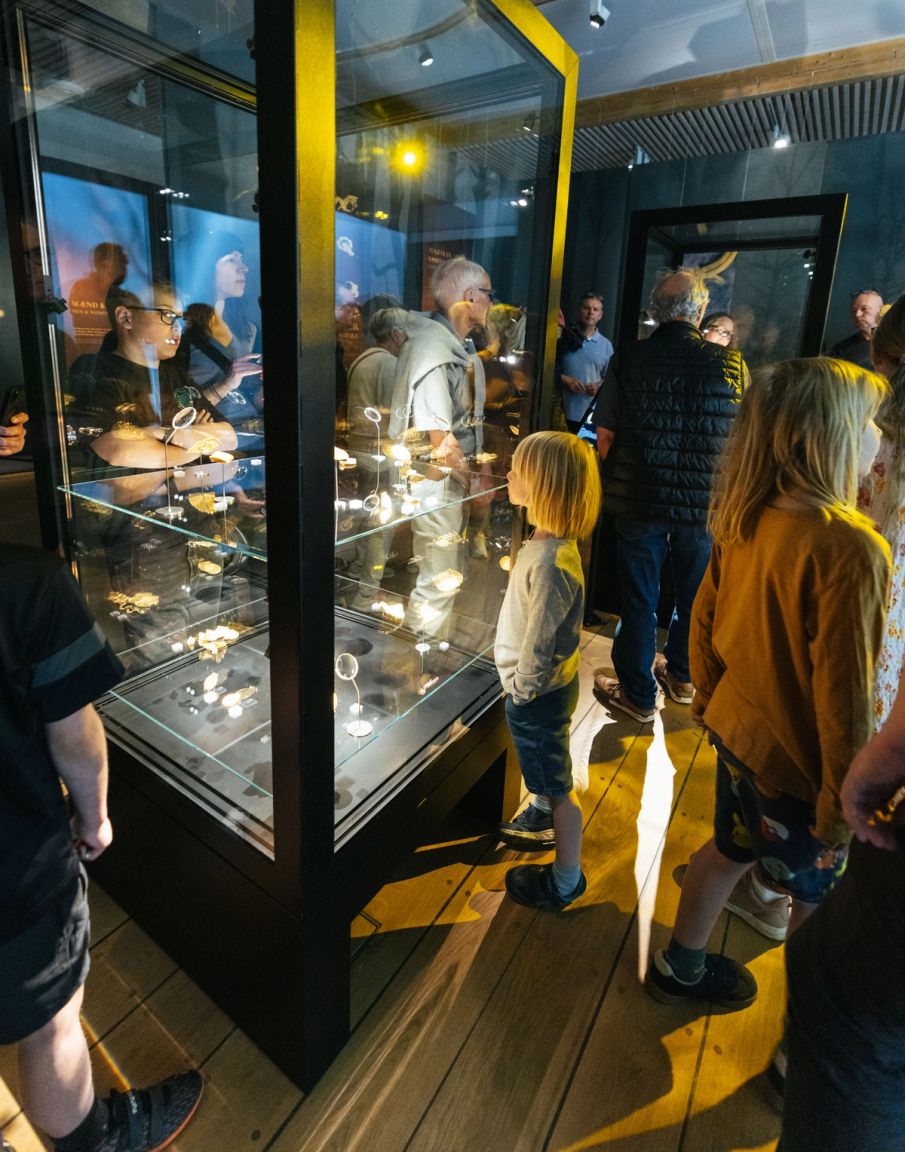
In the exhibition "The Gold treasure from Vindelev" you can get close to the 23 pieces of gold that lay hidden and forgotten in Vindelev, near Jelling. These include four medallions from the Roman Empire and 13 bracteates with mythological motifs. Every single piece of gold is valuable, but everything the hoard reveals about our past is priceless.
1.
See The gold treasure from Vindelev
There was once a powerful family in Vindelev
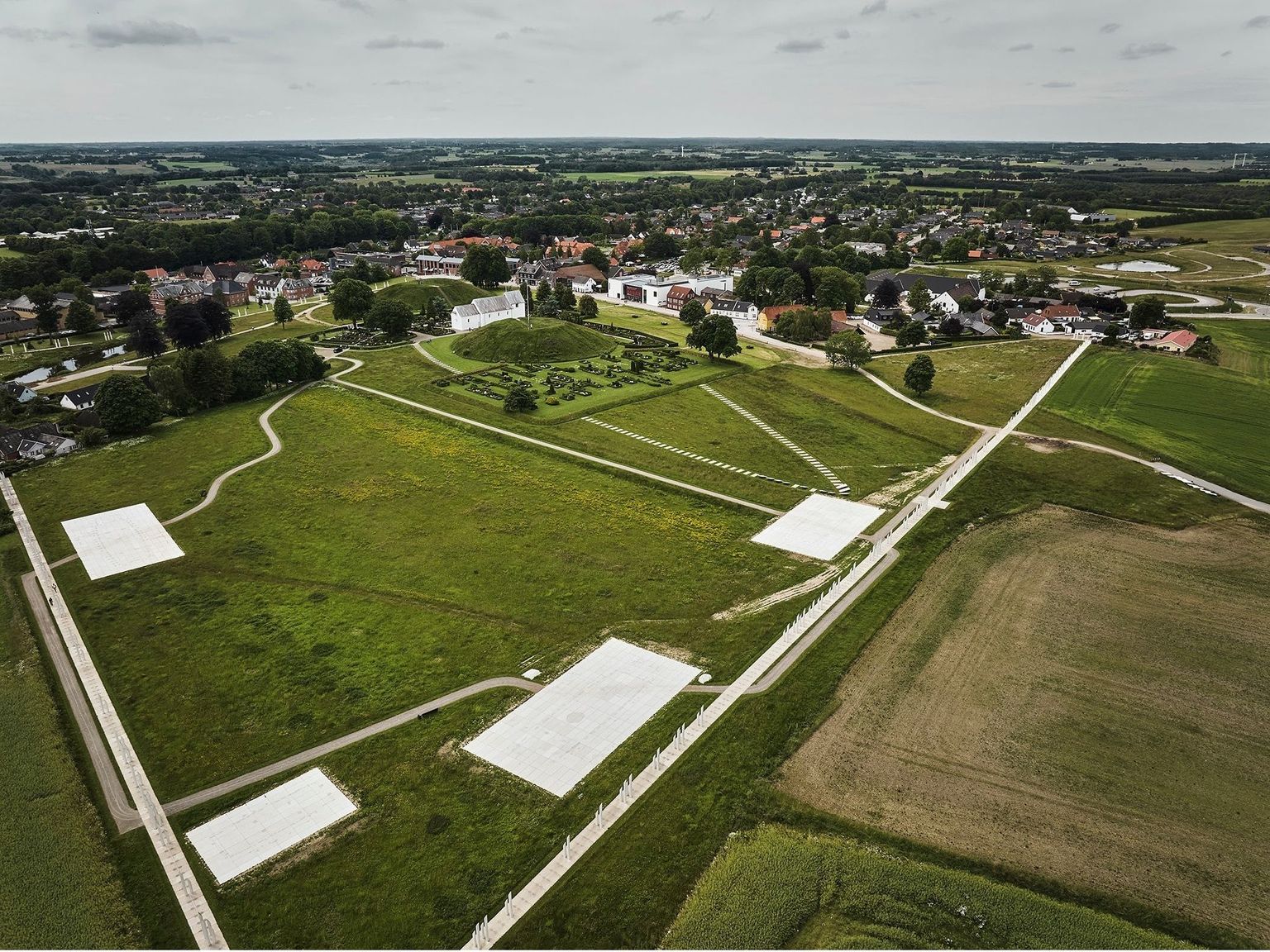
The Vindelev gold hoard tells the story of a very important and international figure who lived in the small Jutland town of Vindelev. It wasn't just anyone who got hold of these medallions from Roman emperors and knights. Through the years they were exchanged between families and generations in Northern Europe, until they were hidden and forgotten 1,500 years ago just a few kilometers from the museum.
"The largest and most important gold treasure in Danish history since the Golden Horns"
3.
One of the largest gold finds in Danish history
On a cold December day in 2020, a groundbreaking discovery was made. Large round gold discs emerged from the barren earth. The two old school friends, Ole Ginnerup Schytz and Jørgen Antonsen, had found the Vindelev treasure. The treasure consists of 23 pieces of gold weighing a total of 795.6 grams and is one of the largest gold finds ever in Denmark.
4.
Odin was known long before the Viking kings
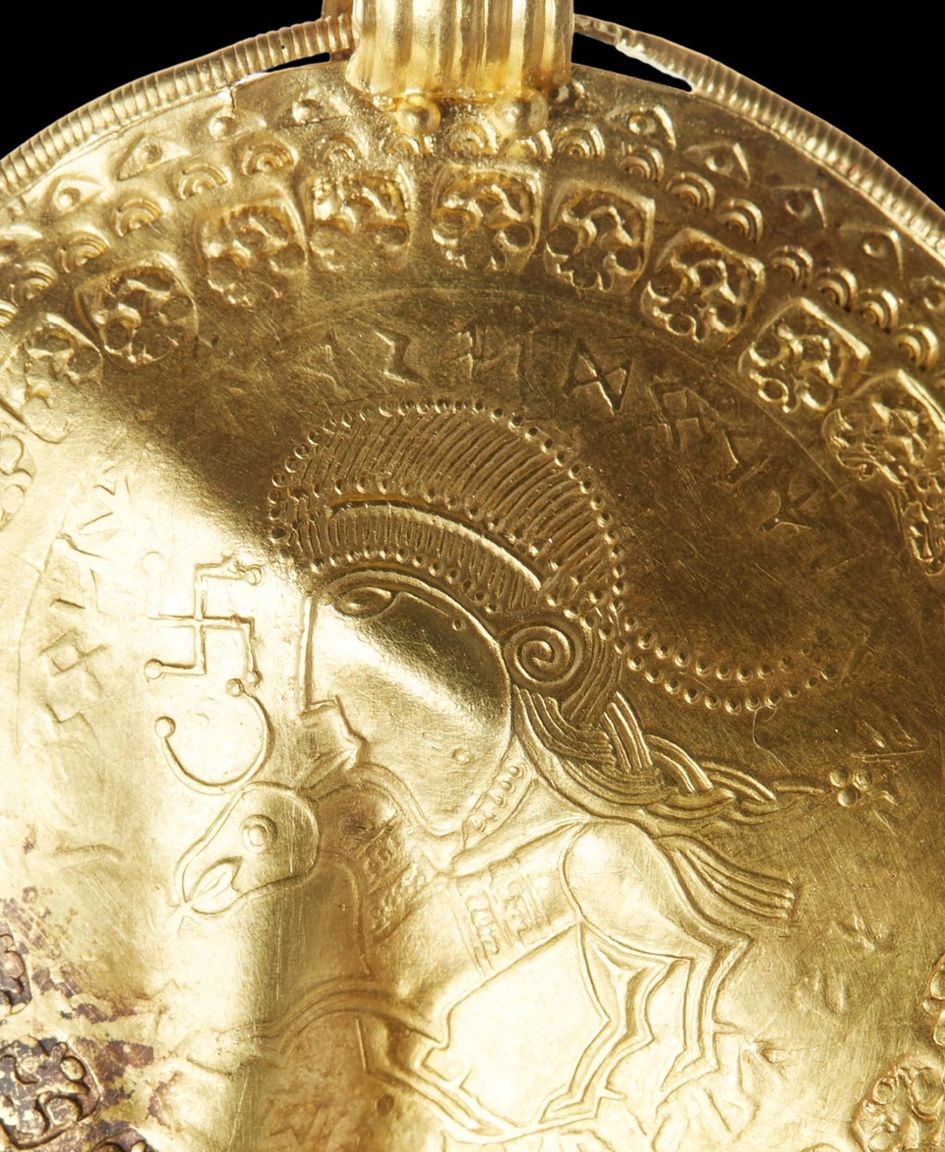
"He is Odin's man." That's what it says on one of the medallions, also called a bracteate, from the Vindelev find. Scholars from the National Museum succeeded in deciphering the runes, which date Nordic mythology 150 years earlier than previously thought, to the beginning of the 400s. The runes are the most spectacular since the Golden Horns and could become a key to understanding other prehistoric runic inscriptions.
5.
Given to gods or hidden from villains?
We don't know what the gold treasure was meant for, but in the first half of the 500s, Europe was hit by plague, war and a massive volcanic eruption in the northern hemisphere. The period has since been declared the worst time to be alive. So perhaps the gold was a gift to Odin and the higher powers for protection, or hidden from villains who plundered after the plague.